
It’s based on a small sample size thanks to an early bye week, but the 2015 Tiger-Cats are off to an impressive start on the defensive side of the ball.
Through two games against West Division teams, the Ticats’ defence has been a takeaway machine, producing more interceptions than any other team in the league (6), while maintaining a league-high +8 turnover ratio.
The team is second in the league in total defence (272.5 yards allowed per game), passing defence (228.5 yards allowed per game), and opponent completion percentage (59.4%).
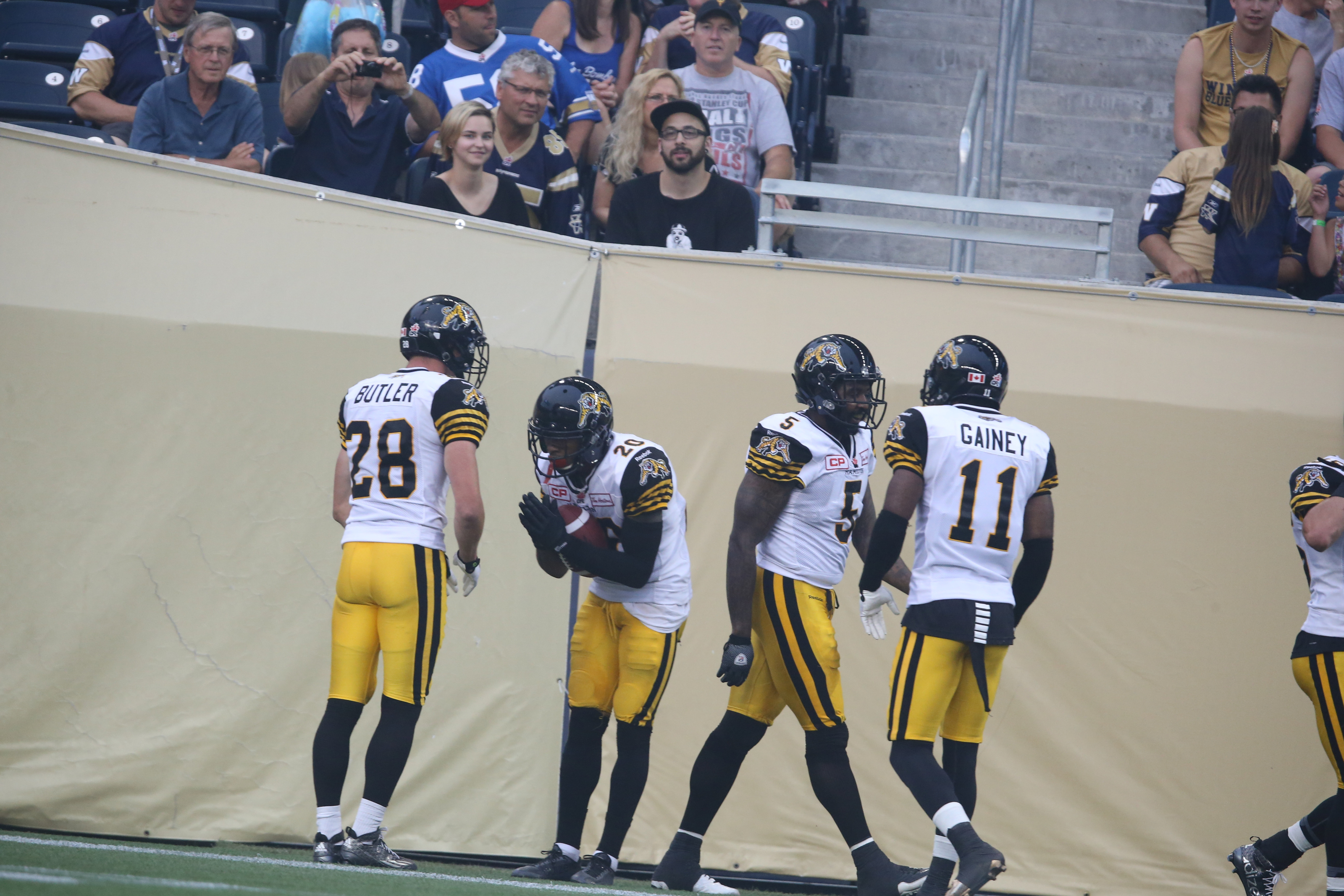
The defence hasn’t just been limiting opponents’ production though, they’ve been finding the end zone on their own too. Despite scoring just three touchdowns on offence, the team leads the league with 75 points scored through two games. This has been in part due to Brandon Banks’ two special teams touchdowns on punt returns, but it’s also due to the team’s three early-season defensive touchdowns.
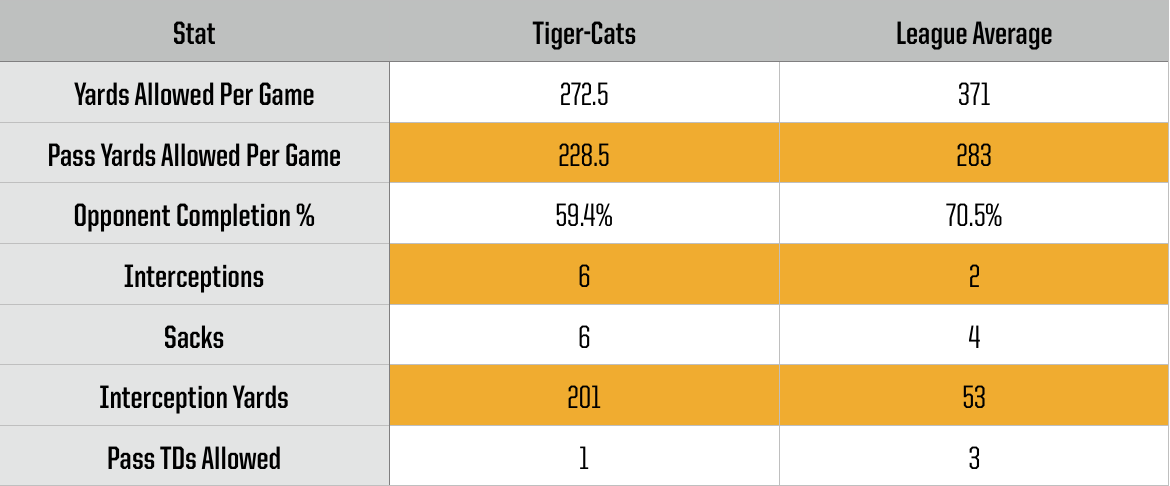
In fact, the Ticats defence has scored three times as many points on interception touchdowns (18) as they’ve allowed on passing touchdowns against (6).
Where has this success come from though? What has allowed the Black & Gold to produce so many turnovers early in the 2015 season?
Quarterback Pressure:
For one, the Tiger-Cats have been aggressive in their pass rush, forcing quarterbacks into hurried passes.
Through the use of multiple defensive fronts and blitzes, defensive coordinator Orlondo Steinauer has made it difficult on opposing offensive lines.
It is no mistake that the Ticats own the top spot on both the interception and sack lists; the pressure on the quarterback has allowed the defensive backs to ball-hawk.
Whether it’s Ted Laurent, Adrian Tracy, Simoni Lawrence or Craig Butler, on nearly every interception the ‘Cats have made sure there is a defender right in the opposing quarterback’s face.
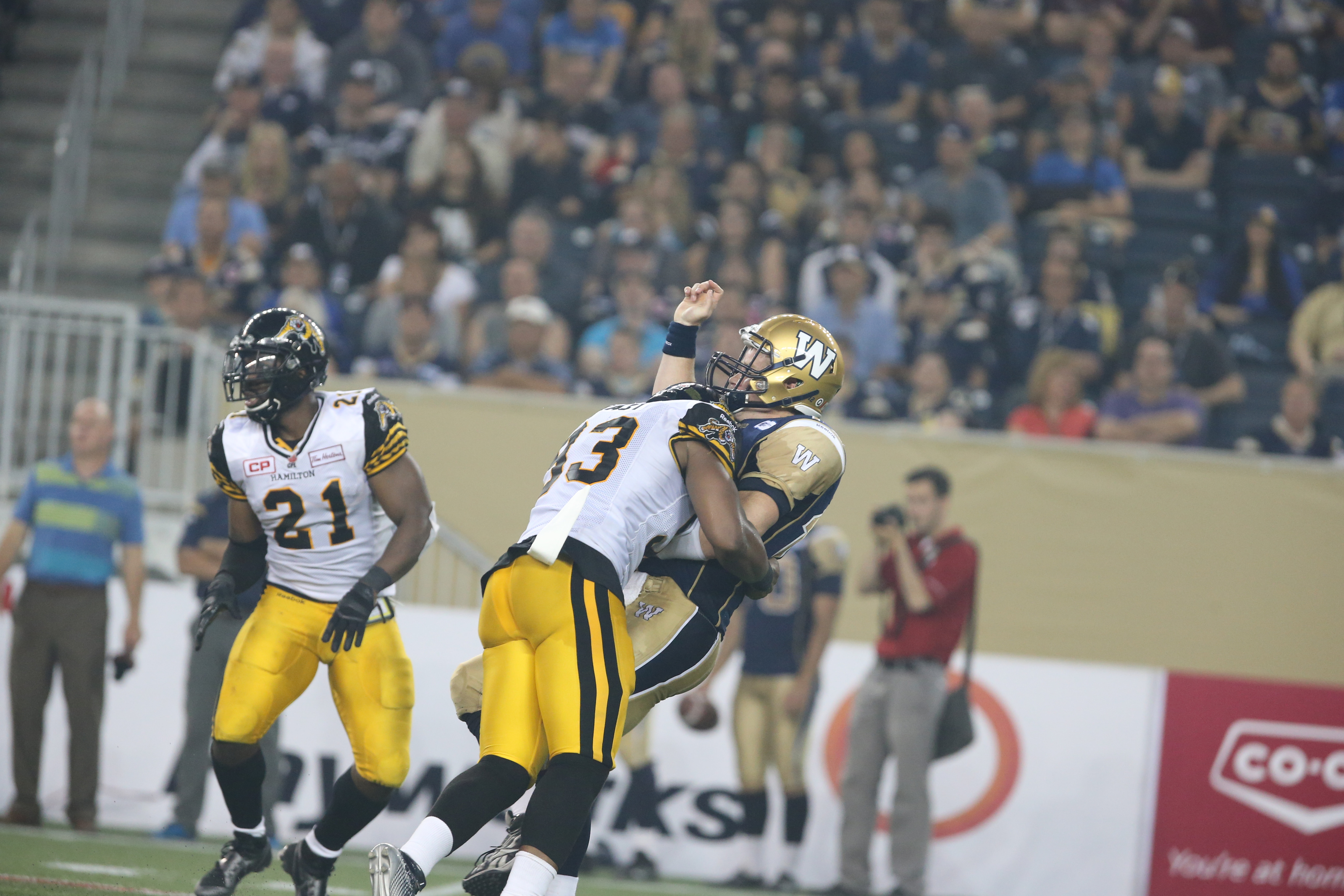
This pressure, first and foremost, causes quarterbacks to rush through their progressions and make poor decisions with the ball more frequently.
Rather than setting up at the top of their drops and progressing through their reads, quarterbacks are forced into rushing those reads and making faster decisions with the football.
On Emanuel Davis’ pick six in Week 2 against the Blue Bombers, it was Lawrence and Laurent who got pressure on Bombers quarterback Brian Brohm, collapsing the pocket from the front, forcing the quarterback to make a hurried and ill-advised pass.
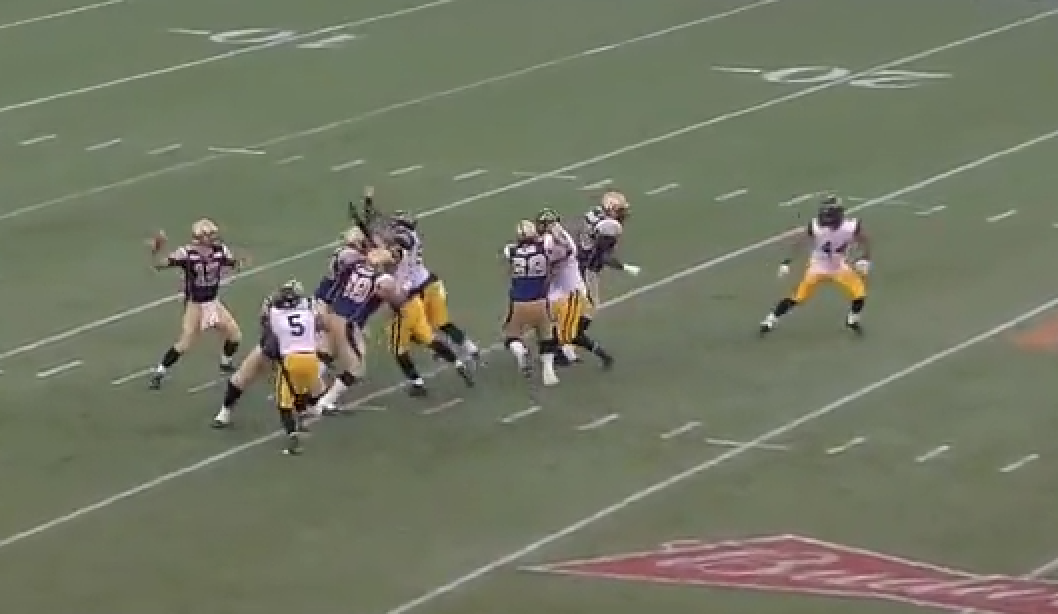
The entire duration of this play, Brohm’s body and head indicated a pass to the left, particularly to Clarence Denmark.
Without the pressure in his face, there’s a much better chance that Brohm would have seen Emanuel Davis lurking in the area of Denmark. However, because he was hurried, the Bombers quarterback went with his first read and threw right into traffic.
Defensive pressure generated through the interior of the defensive line also makes it easier for the Ticats’ safeties to make plays on the ball.
Interior pressure can make quarterbacks drop their eye level to focus on the incoming blitzers, rather than using their body and eyes to move the opposing safety. By taking this tool away from quarterbacks, pressure from the inside makes it easier on Ticats deep safeties and defensive backs in zone coverage to read the play and make breaks on the ball.
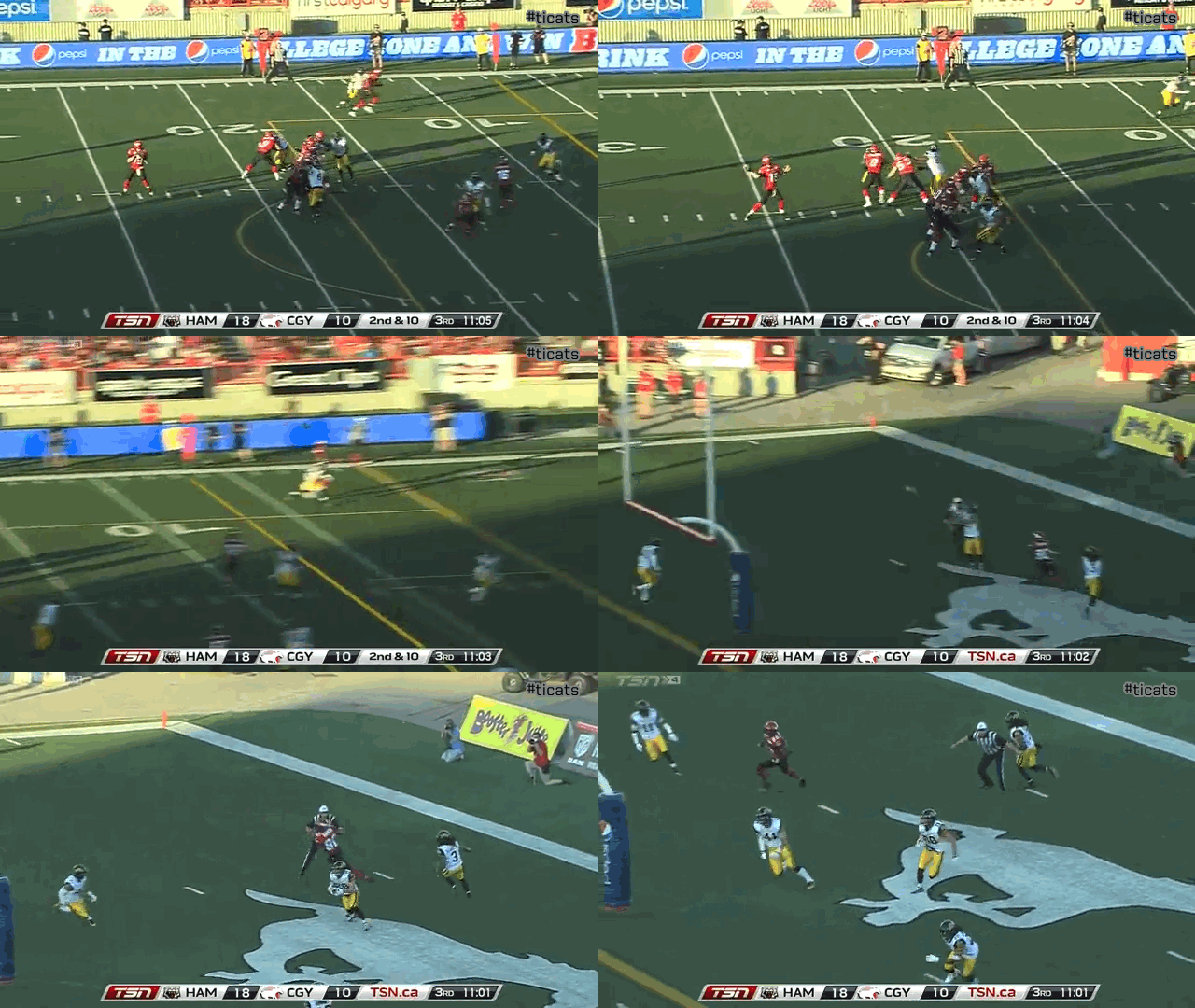
On this particular Week 1 play against the Stampeders, quarterback Bo Levi Mitchell does not look off safety Craig Butler once. Butler sits back in his deep zone, reading Mitchell’s eyes and stepping in front of the pass with ease. This is an example of how interior pressure can impact a quarterback’s rhythm, removing valuable tools–such as the discipline to look off the safety– from their arsenal.
Ball Skills:
Another reason behind all the turnovers has been the ball skills–or the ability to make plays on the football in the air– by the Ticats defenders.
The Emanuel Davis interception is yet again a perfect example of this.
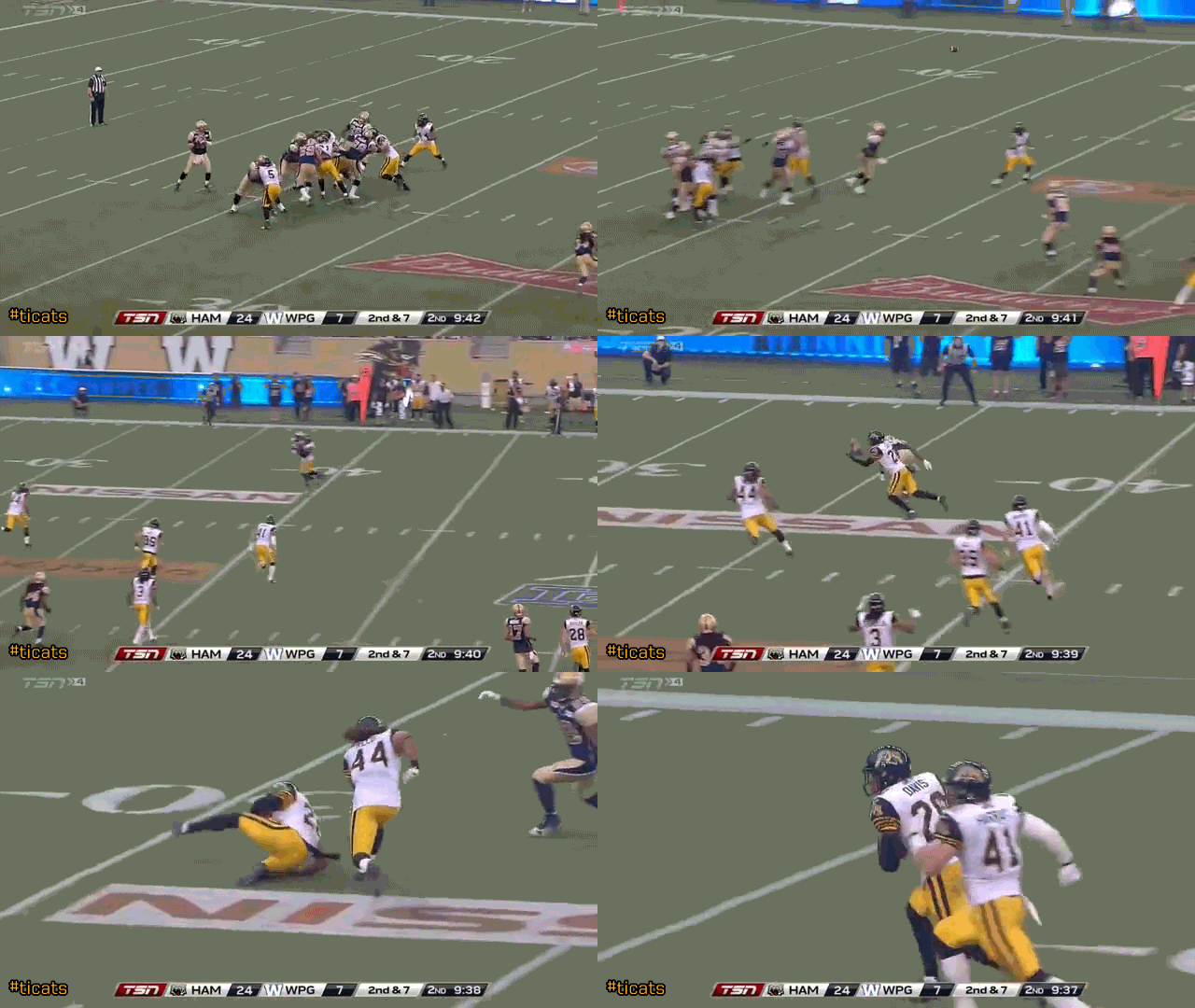
In most cases, even with pressure provided by the defensive line, this play turns into an incompletion and nothing more. Davis makes an exceptional break on the ball, though, and finishes off the play strong.
He muscles Denmark off the ball, getting his body in between the ball and the receiver, then tracks the ball in the air, coming down to the ground with it.
Both of Johnny Sears’ Week 1 interceptions showcased his abilities to make plays on the ball in the air. On his first of the game, the veteran defensive back made a perfect break on the ball, beating the receiver to the pass at the end of his route. On the second, he gets in good position across the middle before high-pointing an errant pass over the head of a Stampeders receiver.
Cohesion:
The consistent pressure generated on the quarterback and the ball-hawking ability of the defensive backs work in cohesion to create turnovers.
The strong pass coverage allows Coach Steinauer to send more heat at opposing quarterbacks, while the added pressure generated from these blitzes force more poor decisions, opening up opportunities for picks. This is where the ball skills of the defensive backs are integral to seal the deal on the takeaways.
The team focused heavily on forcing turnovers throughout the training camp practices, and it appears that this focus has paid off over the first couple games of the season.
Pressure has a compounding effect over the course of a football game; when a football team consistently generates pressure, the quarterback can start to feel that stress, even when it’s not there on a particular play. He will quicken the pace of his reads when it isn’t necessary, and will make hurried, poor decisions with the ball.
If the Tiger-Cats defence is able to continue to generate this level of pressure as the season progresses, it won’t be surprising if they maintain their spot atop the turnover leaderboard.
